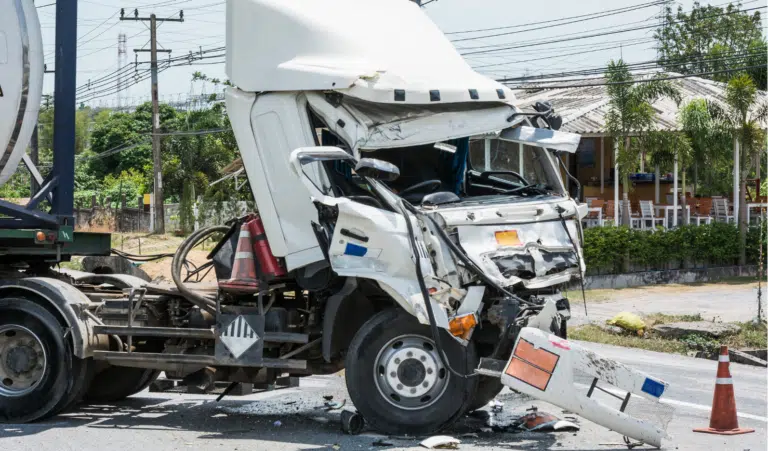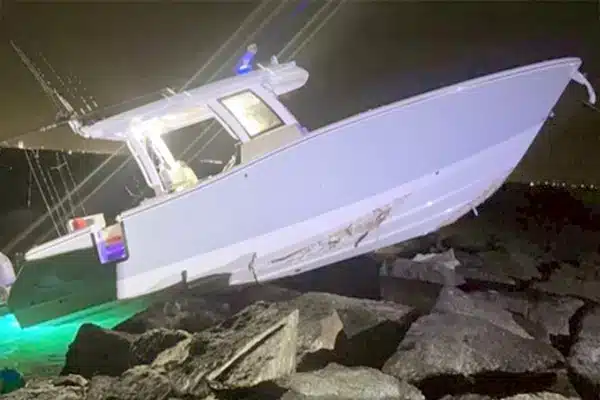

The idea of a vehicle driving itself at first glance sounds simple enough, right? A vehicle just needs to stay in a lane, stop when the light turns red, go when the light turns green, and not crash into the car in front. Simple enough? Maybe not. People have this incredible ability to infer information in scenarios where there may only be fragments, or sometimes nothing at all. You need to stay in your lane, right? But what if a vehicle is stopped on the side of the road ahead of you and is partially in your lane? Should you stop? Should you veer slightly out of your lane to get around? Should you move to the next lane over? But what if there isn’t another lane? Let’s take a look at what makes autonomous vehicles possible, dive into the technology, and try to understand why it isn’t quite as simple as it first sounds.
LiDAR is commonplace on a lot of autonomous vehicles (but not all). It’s the ‘big spiny thing’ on the roof of the Waymo jaguars. So what is it? LiDAR stands for Light Detection And Ranging. It sends out pulses of laser near infrared light and measures how long it takes for them to bounce back from the environment. It can use millions of these laser pulses to form a 3D map of the surrounding environment. It sounds fantastic, right? It is! If you can build a 3D map around you, it’s a huge step in getting a vehicle to figure out how to move in that environment. But what if it rains? Or if it’s dusty or foggy? What if things are really shiny and reflective? Using light to detect range is great for a lot of surfaces, but not all. These are forms of interference and it’s a big issue. A lot of software can manage interference but it’s still something that needs consideration.
Radar was such a huge technological leap in the 1930s that it was recognized as being a decisive factor in winning the war. So what is it exactly? Radar stands for Radio Detection And Ranging. Like LiDAR, but it uses radio waves instead, and it doesn’t send out laser pulses. It sends out radio waves that reflect strongly from metals and large solid objects. It has better performance in bad-weather conditions, is more commonly equipped in modern vehicles, and is a staple part of most forward collision mitigation programs. If your car can follow the vehicle in front, usually this is radar in your vehicle measuring the distance and relative velocity to the vehicle in front. This still has weaknesses, however. Imagine driving down the highway and you’re coming up to a signage gantry. Your radar sees a giant stationary object you happen to be travelling towards but there are ways around this, which is why your car doesn’t apply the brakes regularly.
Cameras. Most people are aware of how these work. It looks at something and voila, an image has appeared on our phone. It’s familiar because it’s how our eyes work. Vehicles have a whole bunch of different techniques for using cameras. Some cars have one camera which often syncs with radar. Some vehicles use two cameras spaced apart to get a sense of depth perception. This is how we gauge distance with our eyes, each view has different perspectives which gives us depth perception. It’s how people can look at the image above and see a shark. Cameras naturally have shortcomings too. Fog, the dark, too many lovebugs splattered on the camera.
Ok, so we’ve mastered the systems that read our surroundings, and we recognize that all these systems aren’t quite as good as we want and need in all scenarios. That brings the last tool to the shed. The golden child of Wall Street. Artificial Intelligence. Just have AI figure it out, right? Well, yes and no. ChatGPT is probably the most famous AI model, known as a large language model, LLM. An LLM at its core is just predicting the most statistically likely next words in sequence. By feeding it a wealth of knowledge in the form of literature, it can develop connections between words that allow it to create language. When it comes to autonomous driving AI, we run into a couple hurdles. While the internet contains a vast sea of literature, it doesn’t capture the same amount of data for driving. There isn’t the same quantity of training material. We also need to recognize that compute times are drastically different. ChatGPT taking several seconds to give me an answer on the machine ethics of saving the driver or hitting a pedestrian is several seconds too long for an autonomous driving AI to respond. While there is no shortage of considerations to be made, we also need to recognize that AI models can sometimes ‘hallucinate’ and create factually incorrect information.
Problems aside, autonomous cars are already here. Waymo as a driverless taxi service, and many manufacturers have some degree of self-driving software on their vehicles. Mercedes with Drive Pilot, Tesla Full Self-Driving, GM Super Cruise, Ford Bluecruise, BMW highway assistant. The list goes on. Foundations of autonomous driving have already been poured, and it can’t be too long now before the mainstream use of it really kicks off.